Summer Basement Leaks in Toronto: Stop Water Before It Reaches the Wall
By Daniel Eisenberg, on 2026-08-10
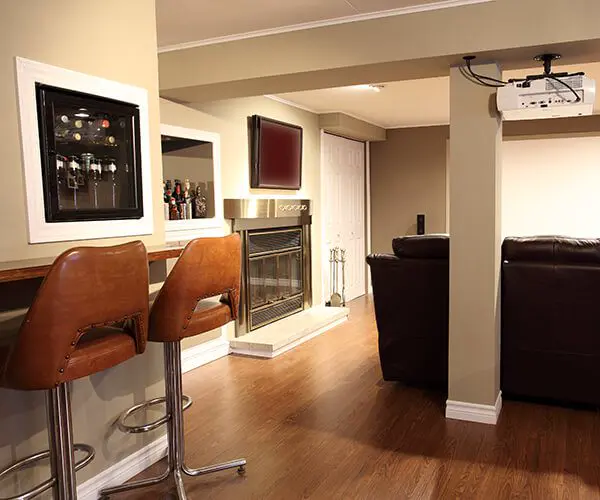
If your basement smells like a dock every time it rains, the water isn't the problem - it's where it's getting in.
LF Builders has been fixing Toronto homes since 1979. Every summer we get the same call: water in the basement after a heavy storm. Dry clay soil shrinks, then a hard downpour cracks it back open and pushes water against your foundation. By August the rec room smells musty and the drywall is soft. The fix usually starts outside, not with a pump in the corner.
The usual suspects
Water follows the easiest path. Here is what we check first:
- Eavestroughs and gutters. If they overflow or dump next to the foundation, all the roof water lands in a band around your basement walls. New eavestroughs with proper downspout runs cost roughly $2,000–$4,800, depending on linear footage and storeys.
- Grading and hardscaping. Patios, walkways and settled sod can pitch toward the house. Fixing the grade or pulling part of a patio so water flows away runs about $6,000–$25,000. It is not small money, but neither is replacing a rotted basement.
- Foundation cracks. Concrete shrinks and moves. A hairline crack can weep for years before it forms puddles. Exterior waterproofing, crack injection and dewatering run about $4,000–$12,000. The price depends on whether we dig from the outside or repair from the inside.
- Window wells. A clogged drain or missing cover turns a window well into a fishbowl. Fixing the drain and adding a cover is smaller money than tearing out a flooded bedroom.
- Roof edge and siding. Rot soffit, fascia and failed flashing can send water down the wall. Soffit, fascia and siding replacement runs about $3,000–$9,000. Roofing replacement is generally $5,500–$12,000.
Interior versus exterior repair
Interior waterproofing stops water after it enters. It is faster and less disruptive. Exterior work stops it before it touches the wall but costs more because of excavation. If your landscaping is mature, exterior work may mean replanting. We usually look at the whole perimeter, not just the wet corner.
Why summer is the right time
July and August give us dry days to dig, pour and backfill. Repairs cure better in warm weather. We can also watch the house during a real storm and confirm the exact entry point. Waiting until fall often means more rot and a flooded basement during the winter thaw.
What we do first
We walk the property during or right after a rain. We look at the gutters, downspouts, soil line, patio edges and foundation. Then we explain the options and tradeoffs. Sometimes a $2,000 gutter fix solves what looked like a foundation job. Sometimes the foundation work cannot be avoided.
If your basement smells damp, get it checked before the next storm.
Get a free ballpark for your job at lfbuilders.ca/costs/calculator.