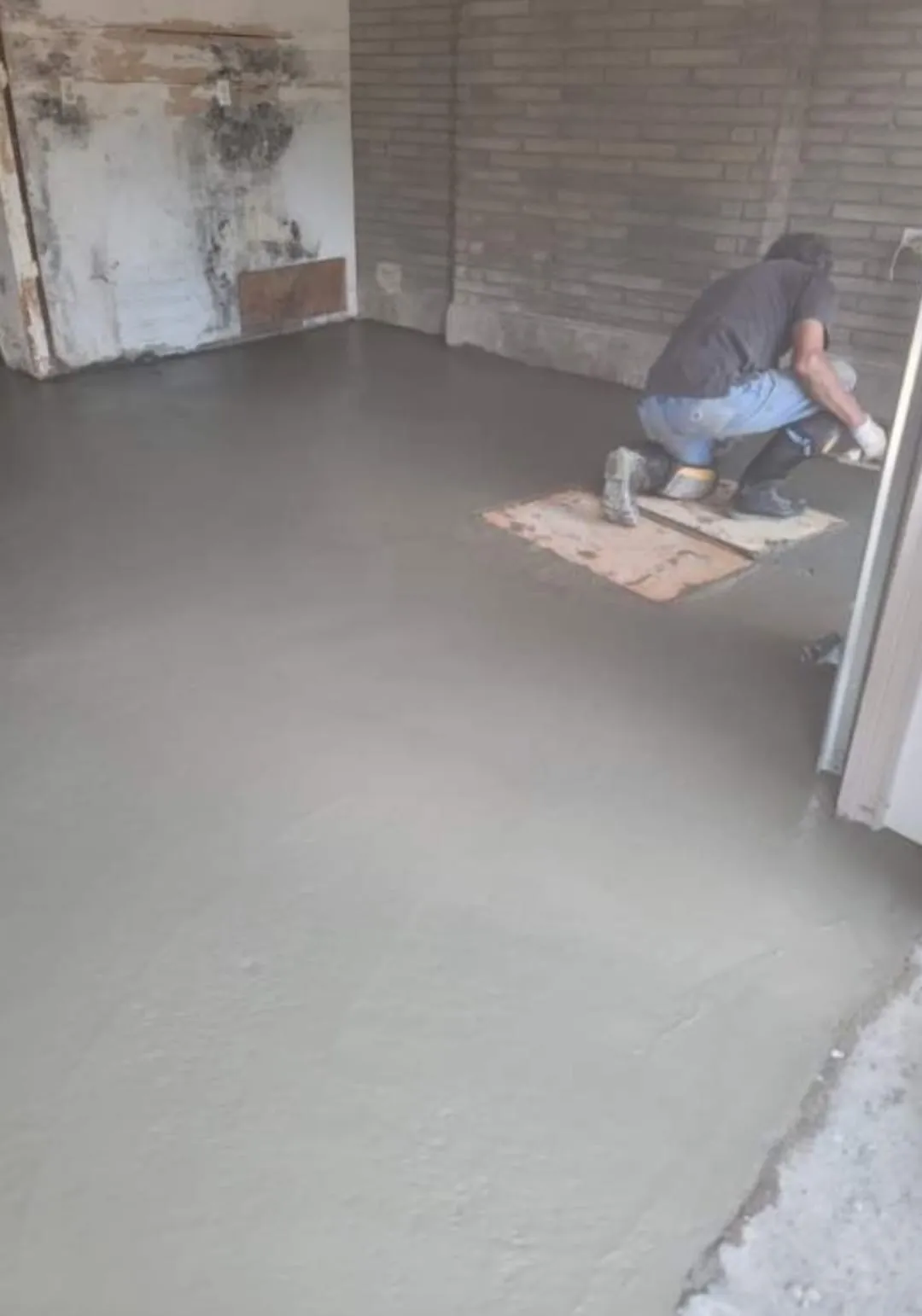
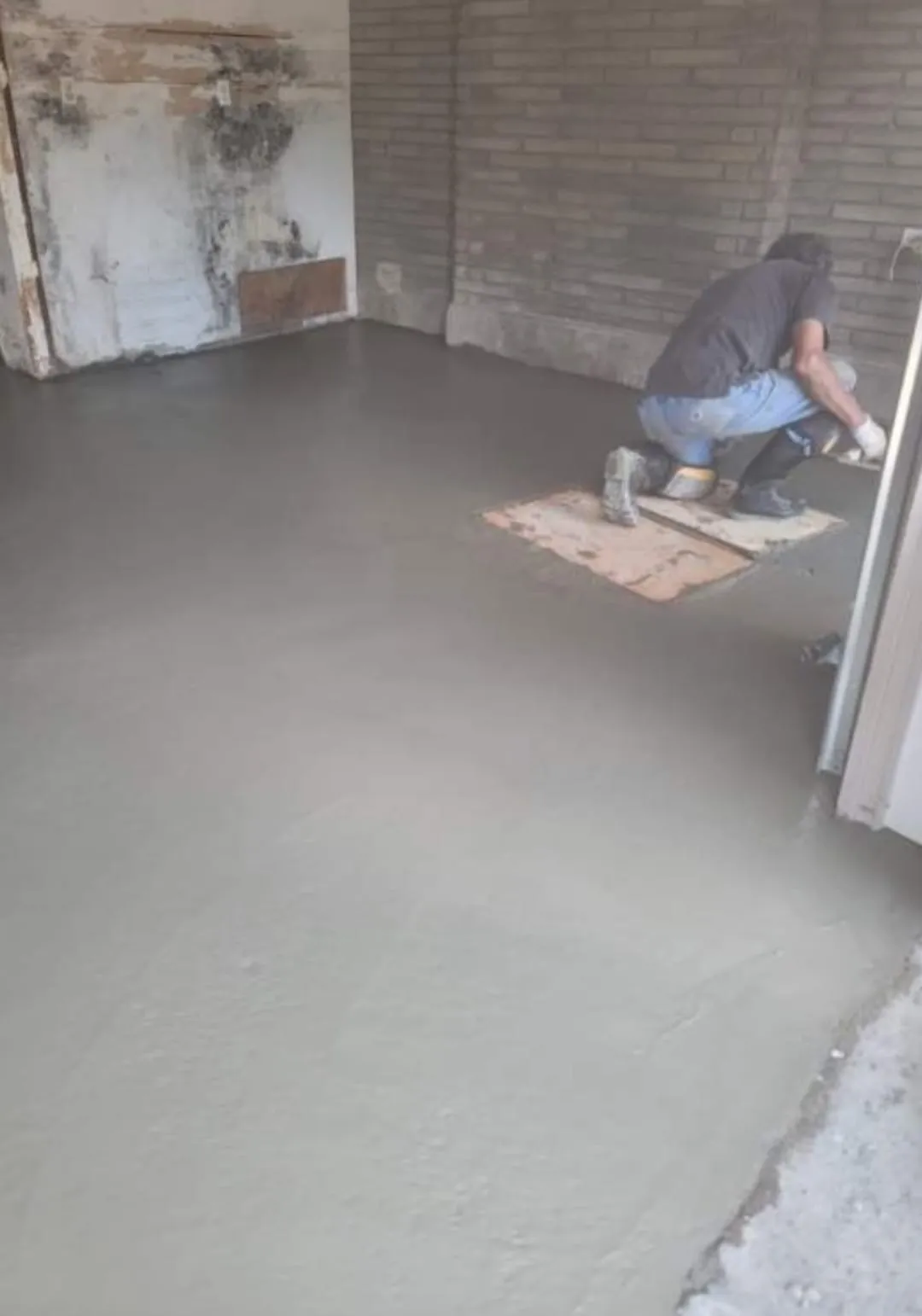
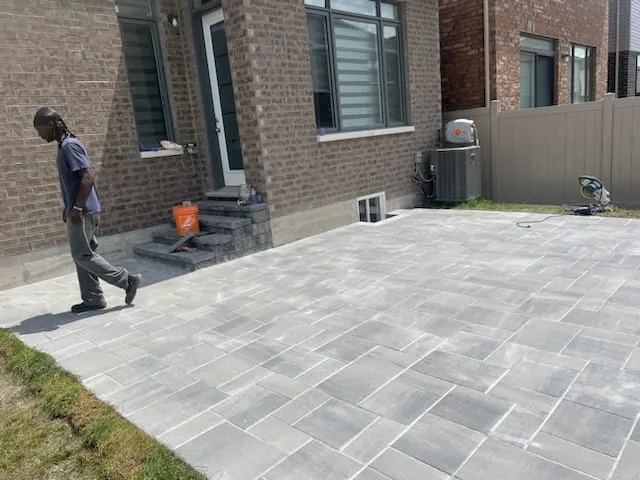
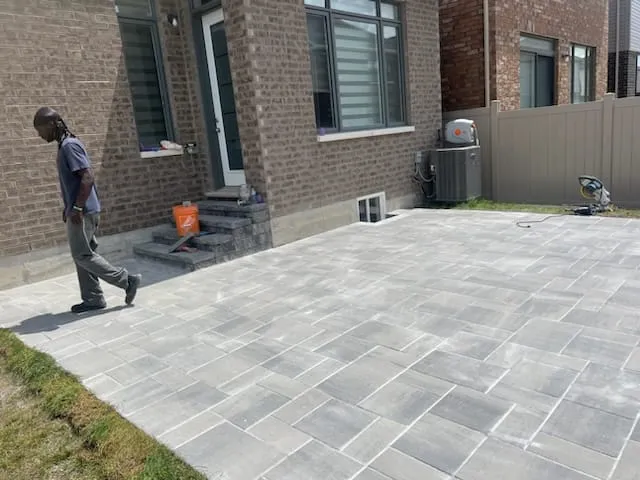
Pavers don't wear out; bases do. Under every wavy, sunken GTA driveway is a base that was too shallow, poorly compacted, or built on unprepared clay. Do it right and you excavate 8–12 inches, lay geotextile so the granular doesn't sink into the clay, then compact granular in 4-inch lifts before a paver ever shows up. That's most of the labour and most of the cost, and it's buried where you can't see it. Which is exactly why cheap quotes skip it.
Frost heave, the Toronto special
Water gets under pavers, freezes, expands about 9%, and lifts whatever sits above it. Come thaw, things settle unevenly. Repeat forty times a winter. A proper base drains so there's less water to freeze, and polymeric sand in the joints hardens to keep new water from getting in. That's why re-sanding joints every 2–3 years is the one maintenance job interlock actually asks of you.
Natural stone vs interlock, honestly
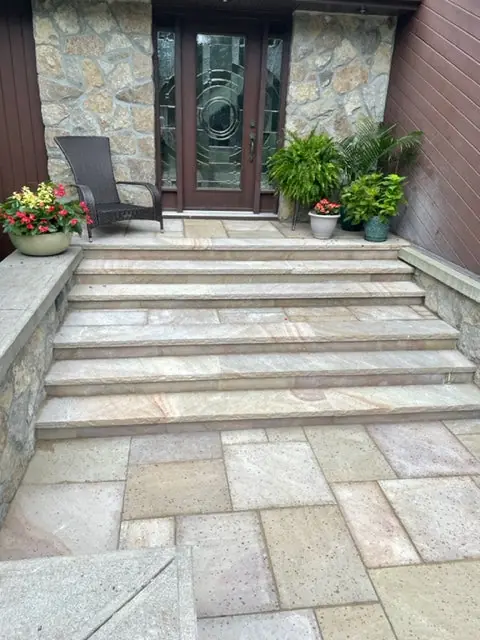
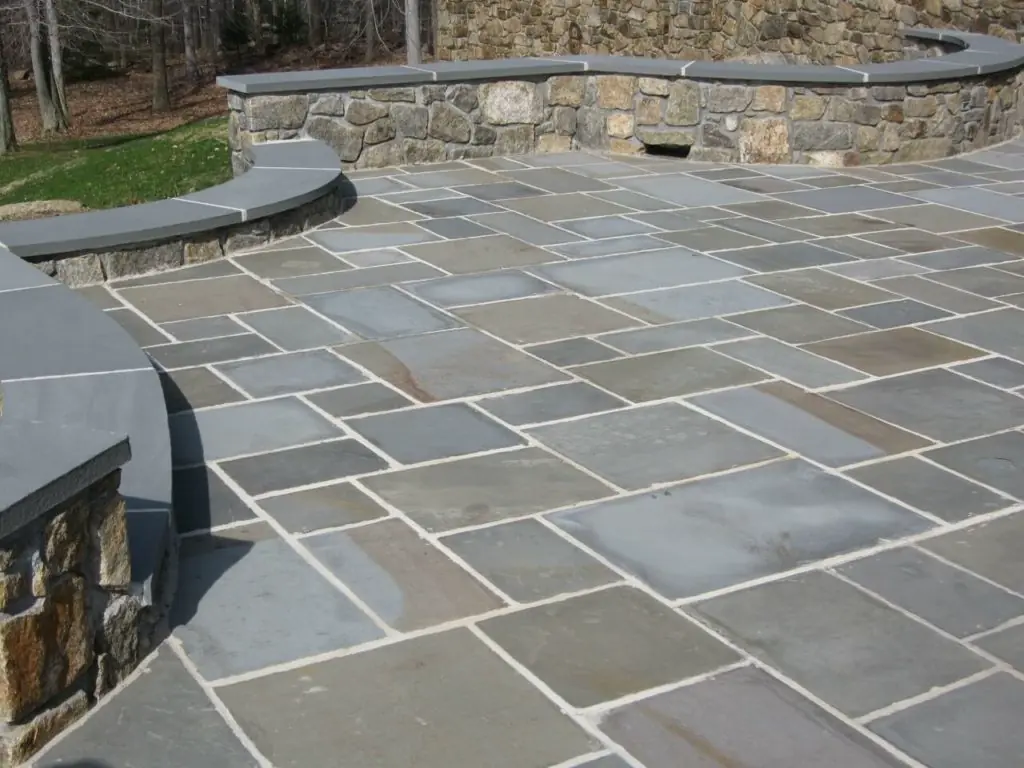
Flagstone looks incredible and no two patios are alike, but it costs more, and dry-laid flagstone wants a fussier base and periodic re-levelling. Concrete pavers are engineered to be uniform, stronger than poured concrete per square foot, and any single damaged unit lifts out and swaps. Driveways: pavers, almost always. Garden paths and showpiece patios: stone earns its price. We install both and we'll tell you where each belongs.
Lift-and-relevel: the repair nobody tells you about
If your interlock is wavy but the pavers themselves are sound, you don't need a new patio. We lift the affected field, rebuild and compact the base under it, and relay the same stones with fresh joint sand. It runs a fraction of full replacement, usually $2,000–$6,000, and the result is dead flat. Contractors who only sell full teardowns don't love this option. It's still the right call for a lot of homes.
Your once-a-season walk-around
Tick what checks out. Anything you can’t tick is worth a closer look.
Things people get told (that aren’t quite true)
“Weeds grow up from under pavers”
They grow down, from seeds landing in joints with old, tired sand. The fix is joint maintenance, not nuking the patio. Fresh polymeric sand starves them out.
“Sealing is mandatory”
Sealing deepens colour and makes stains easier to lift. It doesn't hold a patio together. Skip it entirely if you like the natural look; the base doesn't care.
“Poured concrete lasts longer than pavers”
Poured slabs crack, and the crack is forever. Pavers move as units and can be relaid. In freeze-thaw country, a repairable surface beats a monolithic one over 20 years.
Does your hardscape need a crew?
1. Walk the surface. It feels…
2. The joints between stones?
3. Age of the installation?
Questions we hear every week
What does interlock cost per square foot in the GTA?
Installed interlock typically runs $18–$35 per square foot in 2026, depending on stone and base work. Natural flagstone sits higher.
Why did my old pavers sink and get wavy?
Frost heave from a shallow or poorly compacted base. A proper rebuild uses 8–12 inches of compacted granular — that’s what keeps it level for decades.
Can you fix existing interlock without redoing everything?
Often yes — lift, re-base and re-sand the affected area for $2,000–$6,000 rather than a full teardown.
How long does a patio take?
Most patios and walkways take 3–7 working days; driveways about a week.
Samm's Corner: Natural stone vs interlock, honestly
Hi there, I’m Samm Simon, your friendly renovation mascot, and I’m here to help you sort through the summer great debate: natural stone versus interlock. Whether you’re dreaming of a new patio, walkway, or driveway, I’ll keep things honest and practical so you
Hi there, I’m Samm Simon, your friendly renovation mascot, and I’m here to help you sort through the summer great debate: natural stone versus interlock. Whether you’re dreaming of a new patio, walkway, or driveway, I’ll keep things honest and practical so you…